
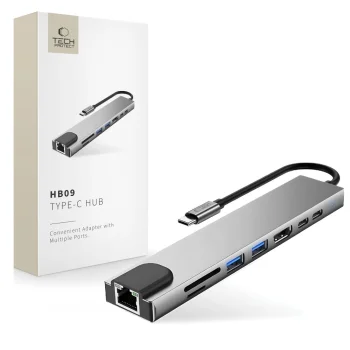
New
-5%
USB Hubs for Computers
11 products
USB hubs include USB 3.0 port expanders, multifunction USB-C adapters with HDMI and PD, and models with individual port switches from Orico, Baseus, Newell and Ugreen. They suit computer setups that need connections for several peripherals or an external display. Choose by the computer connection, required port types and power arrangement.
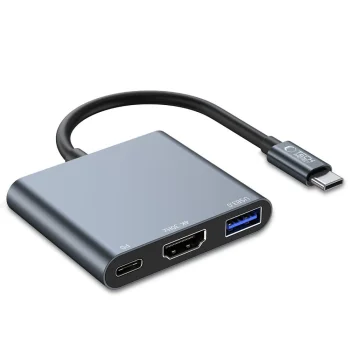
Tech-Protect
USB-C Hub Tech-Protect V1 3-in-1 – HDMI 4K 30Hz, USB-A 3.0, USB-C PD 100W, Gray
Delivery in 5–12 business days
14.90 €
New
-9%
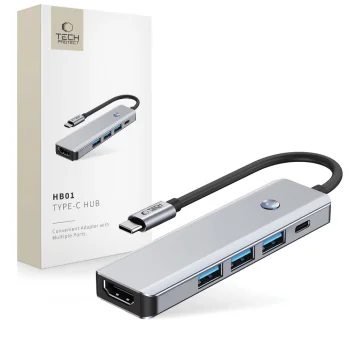
Tech-Protect
Tech-Protect HB01 5-in-1 USB-C Hub Adapter HDMI 4K 60Hz PD 100W USB 3.0 - Gray
Delivery in 5–12 business days
15.20 €16.70 €
New
-9%
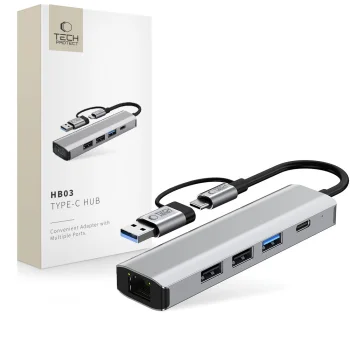
Tech-Protect
Tech-Protect HB03 5in1 USB-C & USB-A Hub Adapter with RJ45 - Gray
Delivery in 5–12 business days
13.20 €14.50 €
New
-9%
Tech-Protect
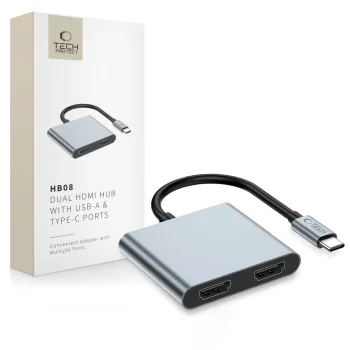
Tech-Protect HB08 4in1 USB-C to 2x HDMI, USB-A, USB-C PD 100W Adapter - Gray
Delivery in 5–12 business days
14.40 €15.80 €

-15%
Tech-Protect
Tech-Protect V0 5-in-1 USB-A Hub (USB 3.0 / 3x USB 2.0 / USB-C) - Gray
Delivery in 5–12 business days
12.20 €14.40 €

-15%
Tech-Protect
Tech-Protect V4 6-in-1 USB-C hub with HDMI and card readers, grey
Delivery in 5–12 business days
15.20 €17.90 €

Tech-Protect
Tech-Protect V6 4-in-1 USB-C hub with HDMI and PD 100 W, grey
Delivery in 5–12 business days
20.80 €
New
-9%
Tech-Protect
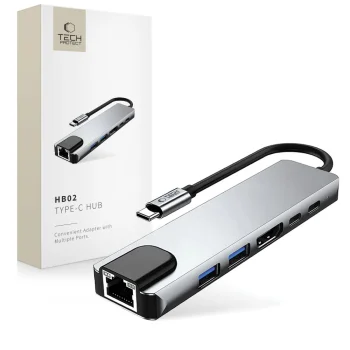
USB-C HUB Adapter Tech-Protect HB02 6in1 HDMI 4K RJ45 PD100W Gray
Delivery in 5–12 business days
16.80 €18.50 €
-21%
Tech-Protect
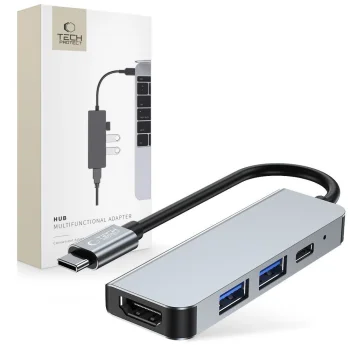
USB-C Hub Tech-Protect V2 4in1 (HDMI, USB 3.0, USB 2.0, USB-C) - Gray
Delivery in 5–12 business days
18.10 €23.00 €
-15%
Tech-Protect
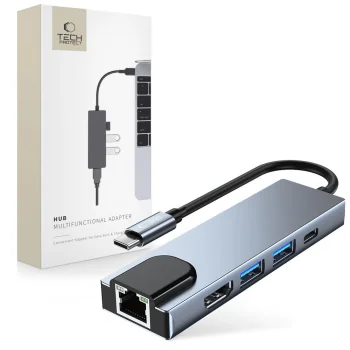
USB-C Hub Tech-Protect V3 5in1, HDMI, RJ45, USB 3.0, Gray
Delivery in 5–12 business days
23.20 €27.40 €
USB hubs add connections for computer peripherals and, on multifunction models, external displays and power delivery. The range includes USB 3.0 hubs, USB-C adapters with HDMI and PD, hubs with individual port switches, and USB sharing switches. Orico, Baseus, Newell and Ugreen offer different connection layouts, from USB expansion to adapters combining several interfaces.
How to choose USB hubs for computers
Check the specific hub's compatibility with your computer, including the connector and support for the functions you need. Count the devices you will connect simultaneously, then identify the required USB-A, USB-C and HDMI ports. For file transfers, compare the stated USB standard and data rate. Power requirements, cable length and port positioning also matter when arranging a desk.
- USB 3.0 hubs: These add USB ports for peripherals. Choose the port count around the devices you intend to use at the same time.
- Multifunction USB-C hubs: These combine several connection types. Compare the actual port list rather than relying only on the advertised number of functions.
- HDMI connections: An HDMI-equipped hub can connect an external display when the computer supports the required video output. For models labelled 4K, review the stated display conditions.
- Power adapters and PD: Some hubs include a separate power adapter, while some USB-C hubs support PD. These serve different power arrangements, so check the purpose of each power connection.
- Port switches and sharing switches: Individual switches control separate hub ports. A USB sharing switch changes connections according to its specified switching arrangement.
For a keyboard, mouse and other USB peripherals, focus on port count and layout. For a workspace with an external display, consider a USB-C hub with HDMI. Where power delivery is also needed, compare PD support alongside the data connections.
Frequently Asked Questions
What is the difference between a USB hub and a multifunction USB-C adapter?
A USB hub primarily adds USB ports. A multifunction USB-C adapter can also include HDMI and PD, depending on the model.
Can every USB-C hub connect an external monitor?
A USB-C hub needs a suitable video output, such as HDMI, to connect an external monitor. The computer's USB-C connection must also support the required video function.
Is a powered USB hub the same as a USB-C hub with PD?
A powered USB hub uses a separate power supply according to its design. A USB-C hub with PD supports power delivery through its designated USB-C connection, so the two features serve different purposes.
What are individual switches on a USB hub used for?
Individual switches on a USB hub turn the corresponding ports on or off. They allow connected peripherals to be controlled separately.
 Gudri pirkumi vienuviet