
New
Energy meters and plug timers
4 products
Energy meters and plug timers include plug-in electricity consumption meters, wattmeters, digital socket timers and DIN rail timers from Greenblue, Maclean, Newell and Izoxis. These devices suit households looking to monitor appliance energy use or set operating times. Choose according to whether you need measurement or timed switching, then consider the connection type and permitted electrical load.
New
Maclean
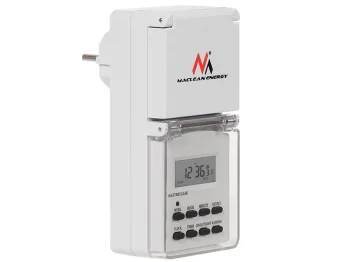
Maclean Digital Outdoor Timer, Random Function, 3600W, IP44, MCE08
Delivery in 5–15 business days
14.10 €

New

New
Energy meters and plug timers cover two practical tasks: monitoring electricity consumption and controlling when electrical appliances operate. The range includes plug-in consumption meters, wattmeters, digital socket timers and DIN rail timers, with brands including Greenblue, Maclean, Newell and Izoxis. Some devices feature an LCD display or LED backlighting, offering another point of comparison when considering where the device will be used.
How to choose energy meters and plug timers
Start with the task: measuring electricity use or scheduling an appliance to switch on and off. Compare the rated voltage, maximum current and permitted power with the requirements of the connected appliance. Check the socket type and the specific model’s functions as well. Installation matters: a plug-in device connects at a socket, while a DIN rail timer requires a different mounting arrangement.
- Energy consumption meters: monitor electricity used by a connected appliance. They are useful when examining consumption over a period of use.
- Wattmeters: measure electrical power. Power and energy consumption describe different aspects of appliance use, so decide which information is relevant to your task.
- Digital plug timers: set switching times for connected electrical appliances. A timer suits equipment that needs to operate according to a schedule.
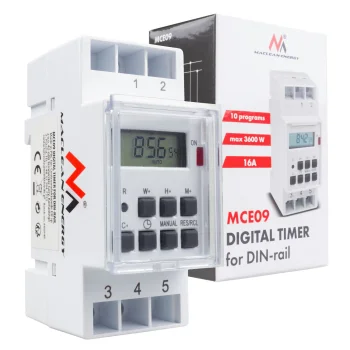
- DIN rail timers: are designed for mounting on a DIN rail. Maclean offers digital timers in this installation format.
- Display and readability: an LCD display or LED backlighting may influence your choice. Consider the device’s position and how easily you can view the readings.
An energy meter suits checking the consumption of individual household appliances, while a timer suits scheduling lighting or other electrical equipment. Keeping measurement and timed switching as separate requirements makes the choice of device type clearer.
Frequently Asked Questions
What is the difference between an energy meter and a plug timer?
An energy meter monitors electricity consumption, while a plug timer sets when a connected appliance switches on and off. Choose according to whether you need measurements or scheduled operation.
How do I check whether a plug timer suits an appliance?
The plug timer’s voltage, maximum current and permitted power must suit the connected appliance. The socket type must also match the intended connection.
How does a DIN rail timer differ from a plug timer?
A DIN rail timer is designed to mount on a DIN rail, while a plug timer connects to a socket. The intended installation location determines which format is appropriate.
Are power and energy consumption the same?
Power describes the electrical load at a particular moment, while energy consumption also depends on operating time. When choosing a wattmeter or energy meter, consider which measurement you need.
 Gudri pirkumi vienuviet